
-
Joyce
- May 7, 2026
- 0 Comments
- Uncategorized
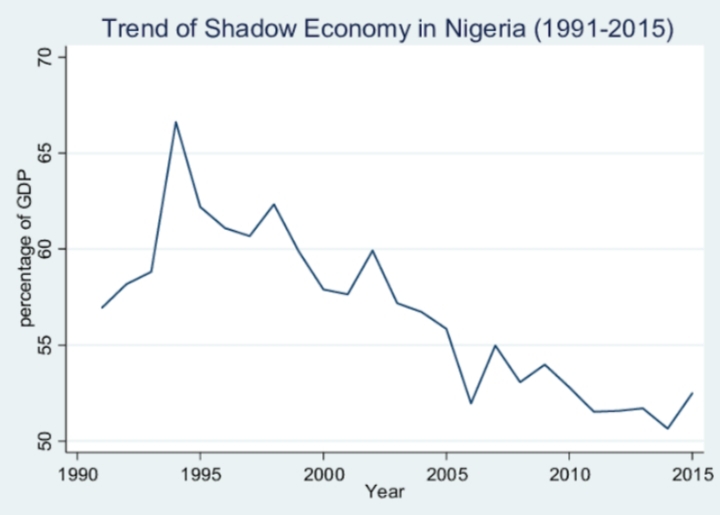
Nigeria’s informal economy remains one of the country’s largest and most influential economic forces. Across cities, towns, and rural communities, millions of Nigerians earn a living through small-scale businesses and unregulated economic activities that operate outside the formal system.
From market traders and street vendors to artisans, transport operators, and online entrepreneurs, the informal sector plays a major role in supporting livelihoods and economic activity. Estimates suggest that this sector contributes close to 60% of Nigeria’s Gross Domestic Product (GDP), making it one of the most significant informal economies in Africa.
Although much of the activity is unregistered and untaxed, it continues to sustain households, create employment opportunities, and drive commerce throughout the country.
What Is the Informal Economy?
The informal economy includes businesses and jobs that function outside official government regulation, taxation, or formal labor systems. These enterprises are often small-scale, unregistered, and independently operated.
In Nigeria, the sector covers a wide range of activities, including open-market trading, food vending, tailoring, transportation services, repairs, farming, hairdressing, and freelance work. In recent years, digital entrepreneurship and social media-based businesses have also become an important part of the informal economy.
For many Nigerians, informal work serves as a survival strategy in response to unemployment, rising living costs, and limited formal job opportunities.
Why Nigeria’s Informal Sector Is So Large
Several factors explain the rapid growth of the informal economy in Nigeria.
One of the biggest reasons is the shortage of formal employment opportunities. As the population continues to grow, the formal sector has struggled to provide enough jobs for the country’s expanding workforce. As a result, many people turn to self-employment and small businesses to generate income.
Complex registration procedures, taxation concerns, and regulatory requirements also discourage many entrepreneurs from operating formally. Some business owners view formalization as expensive, complicated, or unnecessary for small-scale operations.
Limited access to bank financing is another challenge. Without collateral or proper financial records, many small businesses cannot secure loans from traditional financial institutions, forcing them to rely on personal savings or informal funding.
Nigeria’s strong entrepreneurial culture has further contributed to the expansion of the informal economy, as people continue to develop creative ways to earn income despite economic difficulties.
The Importance of the Informal Economy
The informal sector plays a crucial role in Nigeria’s economic stability and social survival.
It provides employment for millions of people and acts as an economic buffer during periods of financial hardship. When formal industries struggle or unemployment rises, many Nigerians depend on informal work to support themselves and their families.
The sector also supplies affordable goods and services to a large portion of the population. Everyday necessities such as food, transportation, clothing, repairs, and household items are often delivered through informal businesses.
In many rural and low-income communities, the informal economy serves as the main source of economic activity and income generation.
The growth of digital technology has further strengthened the sector. Social media sellers, online vendors, delivery operators, and freelance digital workers now represent a growing segment of Nigeria’s modern informal economy.
Challenges Within the Informal Sector
Despite its major contribution to the economy, the informal sector faces several serious difficulties.
Access to finance remains limited because many businesses lack official registration, financial documentation, or collateral needed to secure loans.
Workers in the sector also often operate without social protection, including health insurance, pensions, or legal employment protections. Many businesses function under unstable conditions with little security.
Infrastructure problems create additional pressure. Poor electricity supply, transportation challenges, insecurity, and rising operational costs continue to affect productivity and business growth.
Taxation is another sensitive issue. Governments are increasingly seeking ways to expand tax collection from informal operators, while many small business owners argue that they receive limited public support or services in return.
The Debate Over Formalization
There is ongoing debate about how Nigeria should manage and regulate its informal economy.
Some experts believe that formalizing more businesses would increase government revenue, improve access to finance, strengthen worker protections, and support better economic planning.
Formalization could also help entrepreneurs benefit from government programs, banking services, and larger business opportunities.
However, others warn that excessive regulation or aggressive taxation could place additional burdens on already struggling small businesses. Many argue that reforms should focus on creating incentives rather than imposing penalties.
Simplifying business registration, improving infrastructure, expanding financial inclusion, and reducing bureaucracy are often seen as more effective ways to encourage gradual formalization.
Technology and the Evolution of Informal Business
Technology is changing how Nigeria’s informal economy operates.
Digital payment systems, mobile banking, and fintech services are helping small businesses participate more actively in the financial ecosystem. Informal traders can now accept electronic payments, access small loans, and conduct business online.
Social media platforms such as WhatsApp, Instagram, Facebook, and TikTok have created new opportunities for entrepreneurs to market products directly to consumers.
As technology adoption grows, many informal businesses are gradually becoming more structured and digitally connected.
Conclusion
Nigeria’s informal economy is far more than a collection of unregistered businesses. It is a critical source of employment, innovation, and economic survival for millions of people.
Contributing an estimated 60% of the country’s GDP, the sector remains deeply woven into Nigeria’s economic structure and daily life.
Although challenges such as weak infrastructure, limited financing, and lack of formal protections continue to exist, the informal economy has shown remarkable resilience and adaptability.
Going forward, Nigeria’s ability to support and modernize this sector without damaging its entrepreneurial flexibility will play an important role in the country’s long-term economic development.