
-
Joyce
- August 20, 2026
- 0 Comments
- Uncategorized
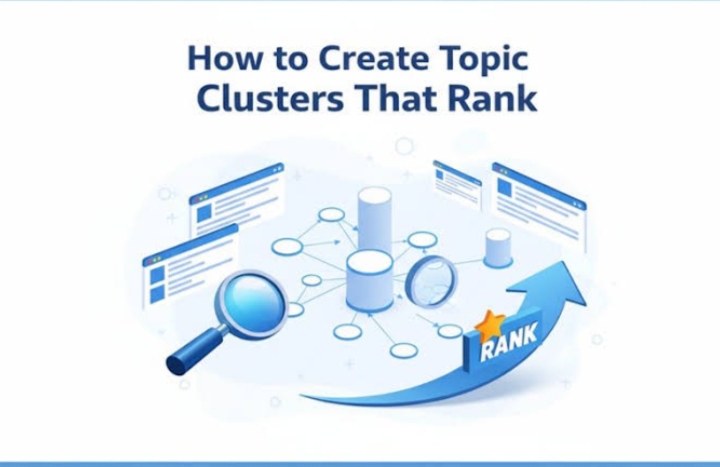
Trying to create a separate article for every keyword can turn content marketing into a never-ending task. Worse, many of those articles may end up covering almost identical information, competing with one another instead of strengthening your website.
A better strategy is to use topic clusters.
Topic clustering allows you to build a group of closely related content around one main subject. Rather than treating every keyword as a separate topic, you organize related searches into a connected content structure.
With the right strategy, one core idea can give you opportunities to rank for dozens of related keywords.
What Exactly Is a Topic Cluster?
A topic cluster is a collection of related web pages built around one central topic.
The main page is usually called a pillar page. It provides a broad, comprehensive overview of the subject.
Other pages, known as supporting content, cover specific parts of that subject in greater detail.
For example, suppose your main subject is social media marketing.
Your pillar page might be:
The Complete Guide to Social Media Marketing
Supporting articles could include:
- Social media marketing strategy
- Social media marketing for small businesses
- Social media content ideas
- Social media scheduling tools
- How to create a content calendar
- Social media analytics
- Social media advertising
- Social media marketing mistakes
Although each page focuses on a different angle, they all belong to the same broader topic.
How Can One Topic Target 50 Keywords?
The secret is recognizing that different keywords can represent the same underlying topic or search intent.
For instance, people interested in topic clusters might search for:
- What are topic clusters?
- How do topic clusters work?
- Topic cluster SEO
- Content clusters
- How to create a topic cluster
- Topic cluster strategy
- SEO content clusters
- Topic cluster examples
These phrases are different, but many searchers are looking for essentially the same type of information.
Instead of creating eight separate articles, you can create one comprehensive resource that naturally answers these related questions.
This is how one idea can potentially attract traffic from many keyword variations.
Begin With a Broad, Relevant Subject
Your first step is choosing a core topic that makes sense for your website or business.
It should be broad enough to contain multiple related subjects but focused enough to remain relevant to your audience.
Take digital marketing as an example.
It can naturally branch into areas such as:
- SEO
- Content marketing
- Email marketing
- Social media marketing
- Paid advertising
- Conversion optimization
- Marketing analytics
Each of these can then be broken down into even more specific topics.
Research More Than Exact Keywords
After selecting your main subject, research what your audience actually wants to know.
Don’t focus exclusively on keyword variations. Look for different types of searches, including:
- Questions
- Tutorials
- Problems
- Comparisons
- Examples
- Tools
- Costs
- Alternatives
- Beginner topics
- Advanced topics
- Common mistakes
This approach gives you a much clearer understanding of the overall topic.
Instead of asking only, “What keyword should I target?”, ask:
“What questions and problems does my audience have around this subject?”
That question leads to stronger content ideas.
Group Keywords According to Search Intent
Finding related keywords is only half the job. You also need to determine whether they belong on the same page.
Consider these searches:
- What is email marketing?
- How does email marketing work?
- Best email marketing software
- Email marketing costs
- How to create an email campaign
They are all related to email marketing, but the searcher’s purpose is different in each case.
Someone asking what email marketing is probably wants a basic explanation. Someone searching for the best software may be ready to compare products.
Trying to answer every possible intent in one article could make the page unnecessarily broad.
Instead, organize keywords based on what the searcher actually wants.
Create a Strong Pillar Page
Once you’ve organized your main topic, create a comprehensive pillar page.
This page should explain the subject at a high level while directing readers to more detailed resources.
For example:
Pillar Page: The Complete Guide to Email Marketing
Supporting pages might include:
- How to Build an Email List
- Email Automation for Beginners
- Best Email Marketing Software
- How to Write Welcome Emails
- Email Marketing Metrics
- How to Improve Email Open Rates
The pillar page provides the big picture, while the supporting pages explore individual areas in depth.
Develop Supporting Articles
Each supporting article should have its own clear purpose.
Instead of repeating the same information from the pillar page, go deeper into one particular problem or question.
For example, a supporting article titled How to Build an Email List From Scratch can focus entirely on list-building strategies.
It can target several closely related search terms while linking back to the main email marketing guide.
This creates a natural relationship between your pages.
Use Internal Links to Connect the Cluster
Internal linking is a crucial part of the topic-cluster model.
The pillar page should link to relevant supporting articles, while supporting pages should link back to the pillar page where appropriate.
You can also connect supporting articles to one another when they provide useful additional information.
This creates a connected content network instead of a collection of unrelated blog posts.
It also makes it easier for visitors to discover more information and helps search engines understand how your pages relate to one another.
Don’t Try to Force 50 Keywords Into One Page
There’s a major difference between ranking for multiple keywords and stuffing keywords into an article.
You don’t need to repeat dozens of keyword variations throughout your content.
Search engines can understand related words, concepts, and context. A comprehensive article can naturally rank for many queries without explicitly targeting every phrase.
The priority should always be satisfying the reader’s search intent.
If your page thoroughly answers the questions surrounding a topic, it may rank for many related searches naturally.
Topic Clusters Help Prevent Content Overlap
Without a clear strategy, websites often publish multiple articles that say almost the same thing.
For example:
- Best SEO Tools
- Top SEO Tools
- SEO Software
- SEO Tools for Beginners
- Best SEO Software
If these articles provide nearly identical information, creating all of them may not add much value.
A topic-cluster strategy encourages you to evaluate whether a keyword deserves a dedicated article or whether it would be better addressed within an existing page.
This can help reduce unnecessary content and make your website easier to manage.
A Topic Cluster Isn’t a Guaranteed Ranking Formula
It’s important to keep expectations realistic.
Creating a pillar page and several supporting articles does not automatically guarantee first-page rankings.
Your content still needs to provide genuine value. It should be accurate, useful, well structured, readable, and aligned with the searcher’s needs.
Other factors also influence rankings, including competition, backlinks, technical SEO, website authority, and overall content quality.
A topic cluster gives your website a logical structure, but good structure alone cannot guarantee search visibility.
A Simple Way to Build a Topic Cluster
The process can be summarized as:
Choose a broad topic → research related searches → identify search intent → group keywords → create a pillar page → publish supporting content → connect everything with internal links.
For example, take the broad subject personal finance.
Your main guide could cover personal finance as a whole, while supporting content could explore:
- Budgeting
- Saving money
- Investing
- Managing debt
- Credit scores
- Retirement
- Emergency funds
- Financial planning
Each section can then develop into more specific articles based on the questions people search for.
Instead of publishing random posts, you’re building a connected library of information.
Final Thoughts
You don’t necessarily need 50 separate content ideas to target 50 keywords.
What you need is a clear understanding of how those keywords relate to one another.
A single strong topic can become a pillar page, multiple supporting articles, and numerous opportunities to rank for related searches.
The objective isn’t to manipulate rankings by repeating keywords. It’s to create useful, comprehensive content that covers a subject from multiple relevant angles.
When your content is organized into meaningful clusters, both readers and search engines can more easily understand what your website is about.
In the long run, that can help you build topical authority and turn individual articles into a connected SEO strategy.