
 Joyce
Joyce 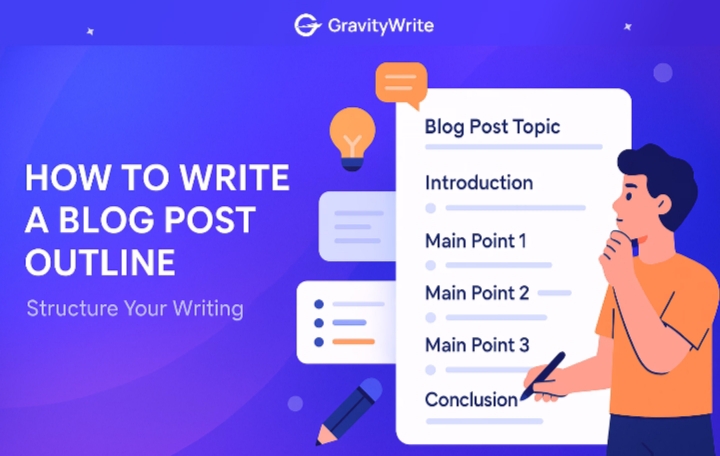
Many writers are eager to start drafting immediately, but taking a few minutes to outline your blog post can make the writing process much smoother. A simple outline helps organize your ideas, keeps your content focused, and ensures your article flows logically from start to finish.
The good news is that you don’t need an hour to create an effective outline. With the right approach, you can build one in just 10 minutes.
Why You Should Outline Before Writing
An outline serves as a blueprint for your blog post. Instead of figuring out what to write as you go, you already have a clear structure in place.
Benefits of outlining include:
- Faster writing sessions
- Better content organization
- Improved clarity and flow
- Less time spent editing
- Reduced writer’s block
- More focused messaging
A few minutes of planning can save significant time later.
A Simple 10-Minute Outlining Process
Minutes 1–2: Identify Your Topic and Purpose
Begin by defining the subject of your blog post and the outcome you want for your readers.
Ask yourself:
- What am I writing about?
- What should readers gain from this article?
Having a clear objective helps keep your content relevant and useful.
Minutes 3–4: Draft a Working Headline
Create a preliminary title that highlights the value of your article.
Examples include:
- How to Create a Blog Post Outline in 10 Minutes
- A Quick Guide to Planning Blog Content
- The Easy Way to Structure a Blog Post
Don’t worry about perfection—you can adjust the headline later.
Minutes 5–6: Outline the Main Sections
Break your topic into several key points or sections.
For example:
- Benefits of outlining
- Step-by-step outlining process
- Common mistakes to avoid
- Sample outline template
- Conclusion
These sections will become your major headings.
Minutes 7–8: Add Supporting Ideas
Under each heading, jot down a few notes or bullet points.
For example:
Benefits of Outlining
- Organizes thoughts
- Saves time
- Improves readability
Common Mistakes
- Overplanning
- Poor structure
- Ignoring audience needs
Keep your notes brief. The goal is to capture ideas, not write full paragraphs.
Minute 9: Include Additional Resources
Think about elements that could strengthen your article, such as:
- Examples
- Statistics
- Expert opinions
- Actionable tips
- Real-life scenarios
Adding them now ensures they’re incorporated during writing.
Minute 10: Review the Structure
Take a final look at your outline and make adjustments if needed.
Consider the following:
- Does the content follow a logical sequence?
- Are any important points missing?
- Does the article achieve its intended goal?
Refine the structure before you begin writing.
Quick Blog Outline Template
Use this framework for future posts:
Title
Insert your working headline.
Introduction
- Attention-grabbing opening
- Problem statement
- Overview of the solution
Main Point 1
- Key idea
- Supporting information
Main Point 2
- Key idea
- Supporting information
Main Point 3
- Key idea
- Supporting information
Conclusion
- Summary of key points
- Main takeaway
- Call to action
Mistakes to Avoid When Outlining
Making the Outline Too Detailed
An outline should guide your writing, not replace it. Keep it concise and flexible.
Forgetting Your Audience
Always focus on what your readers need to know and how you can provide value.
Skipping the Outline Entirely
Although it may seem faster to start writing immediately, planning first often leads to better results and greater efficiency.
Including Too Many Sections
Too many headings can make your content difficult to follow. Stick to the most important points.
Conclusion
A strong blog post begins with a clear outline. By dedicating just 10 minutes to planning your content, you can improve organization, write more efficiently, and create a better experience for your readers.
The next time you sit down to write, invest a few minutes in outlining first. It’s a small step that can make a big difference in the quality of your content.