
 Joyce
Joyce 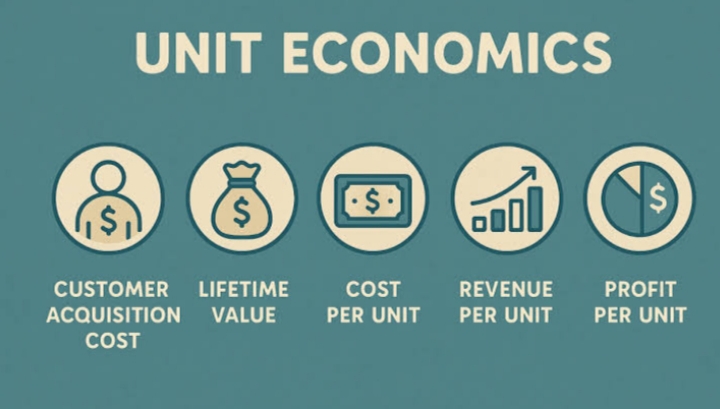
If your business only becomes viable “later,” there’s a good chance it isn’t viable at all. Unit economics forces founders to confront this early by showing whether each customer actually adds value or drains resources.
Understanding Unit Economics
At its core, unit economics examines the revenue and cost tied to a single customer or transaction. The goal is straightforward: determine if one unit of your business is profitable. If it isn’t, expanding operations will only increase losses.
Customer Acquisition Cost (CAC)
CAC represents the total cost of bringing in one customer, including marketing, advertising, and sales efforts.
If acquiring a customer costs more than the revenue they generate, your business model is fundamentally flawed.
Lifetime Value (LTV)
LTV estimates how much revenue a customer will generate throughout their relationship with your business.
A sustainable model usually requires LTV to significantly exceed CAC ideally by two to three times.
Contribution Margin
This is the amount left after subtracting variable costs such as production, logistics, or transaction fees from revenue.
It indicates whether each sale contributes toward covering fixed costs and eventually delivering profit.
Payback Period
This measures how quickly you recover the money spent on acquiring a customer.
Shorter payback periods are better because they reduce pressure on cash flow and make growth more manageable.
Churn Rate
Churn tracks how many customers stop using your product or service over time.
A high churn rate reduces overall customer value and forces you to constantly replace lost users, increasing costs.
Average Revenue Per User (ARPU)
ARPU reflects how much revenue each customer generates within a given timeframe.
Improving ARPU through pricing strategies or upselling can strengthen your overall economics without increasing acquisition costs.
Why It Matters More Than Growth Metrics
Focusing only on growth like user numbers or downloads can be misleading. Without solid unit economics, scaling simply amplifies inefficiencies.
Investors may accept early losses, but they still expect a clear path to profitability. Strong unit economics provides that assurance.
Common Pitfalls
- Misjudging the true cost of acquiring customers
- Overlooking variable expenses
- Overestimating how long customers will stay
- Prioritizing growth over retention
These issues can quietly undermine your business.
Final Insight
Unit economics isn’t just a financial tool it’s a test of whether your business model works. Nail these fundamentals early, and growth becomes sustainable. Ignore them, and expansion will only magnify underlying problems.