
-
Joyce
- April 11, 2026
- 0 Comments
- African Cybersecurity
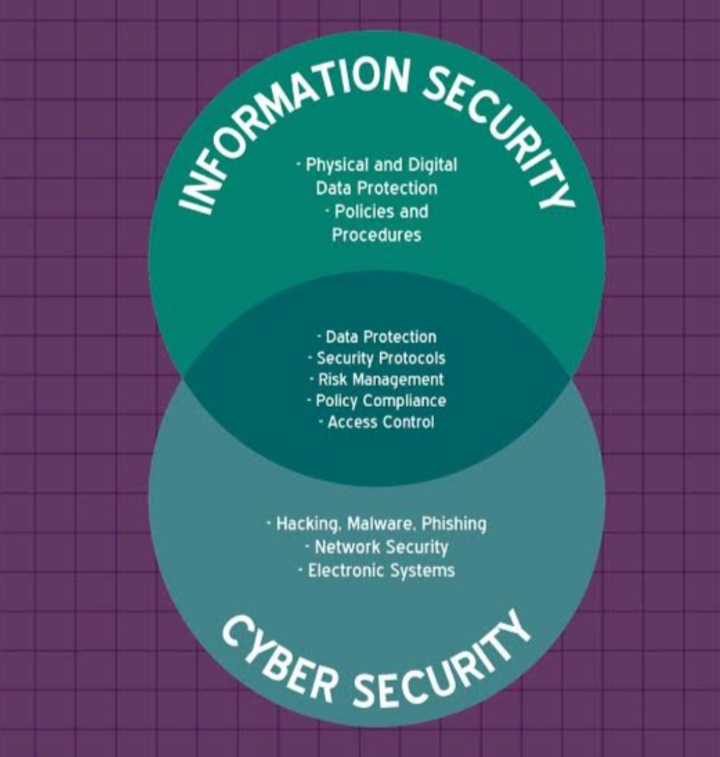
In today’s data-driven world, the terms cybersecurity and information security are often used interchangeably. While they are closely related and share the same goal protecting valuable data they are not exactly the same. Understanding the difference between the two is essential for individuals, organizations, and anyone interested in safeguarding information.
What Is Information Security?
Information security (InfoSec) is a broad discipline focused on protecting all forms of information, whether digital or physical. Its primary goal is to ensure three key principles, often called the CIA triad:
- Confidentiality – ensuring that information is only accessible to authorized users
- Integrity – maintaining the accuracy and reliability of data
- Availability – ensuring information is accessible when needed
Information security covers a wide range of protections, including:
- Physical documents (files, records, printed materials)
- Digital data (databases, emails, cloud storage)
- Policies and procedures that govern data handling
It involves not just technology, but also people and processes, such as employee training, access control policies, and secure storage practices.
What Is Cybersecurity?
Cybersecurity is a subset of information security that focuses specifically on protecting digital systems, networks, and data from cyber threats. It deals with defending against attacks that occur in cyberspace.
Cybersecurity includes:
- Network security
- Application security
- Endpoint protection (computers, smartphones)
- Cloud security
- Protection against threats like hacking, malware, ransomware, and phishing
In simple terms, cybersecurity is concerned with protecting data in the digital world, especially from unauthorized access or attacks.
Key Differences Between Cybersecurity and Information Security
1. Scope
- Information Security: Covers all information, both physical and digital
- Cybersecurity: Focuses only on digital data and systems
2. Focus Area
- Information Security: Protects data from any form of threat (physical theft, human error, or cyber attacks)
- Cybersecurity: Protects against online or cyber-based threats
3. Approach
- Information Security: Includes policies, procedures, and physical safeguards
- Cybersecurity: Relies heavily on technical tools like firewalls, encryption, and intrusion detection systems
4. Examples
- Locking confidential files in a cabinet → Information security
- Installing antivirus software → Cybersecurity
- Employee awareness training → Information security
- Preventing a hacking attempt → Cybersecurity
How They Work Together
Although different, cybersecurity and information security are deeply interconnected. Cybersecurity is essentially a component of the larger information security framework. Organizations need both to build a complete defense system.
For example, a company may use cybersecurity tools to protect its network, while also implementing information security policies to control who can access sensitive documents.
Why the Difference Matters
Understanding the distinction helps organizations:
- Develop more comprehensive security strategies
- Allocate resources effectively
- Address both digital and non-digital risks
- Ensure compliance with regulations and standards
For individuals, it highlights the importance of not just protecting devices, but also handling information responsibly.
Conclusion
Cybersecurity and information security share a common mission protecting valuable information but they differ in scope and focus. While cybersecurity concentrates on defending digital systems from cyber threats, information security takes a broader approach, covering all types of information and risks. Together, they form a strong foundation for protecting data in an increasingly complex and connected world.