 Joyce
Joyce 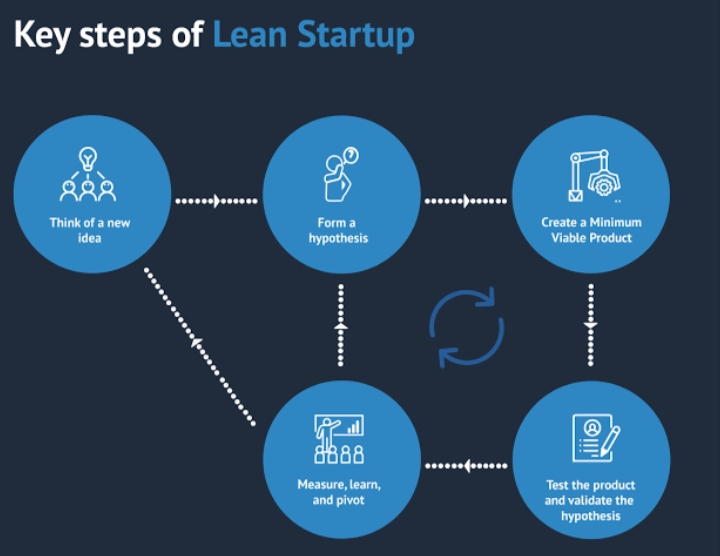
The Lean Startup methodology, introduced by Eric Ries in 2011, transformed how startups approach product development by focusing on rapid iteration, customer feedback, and minimizing waste. In 2026, many wonder if this framework still holds value in today’s fast paced business environment.
What is Lean Startup?
Lean Startup revolves around three key principles:
1.Build Measure Learn: Start by creating a minimum viable product (MVP), test it with customers, and iterate based on feedback.
2.Validated Learning: Test assumptions with real-world data to validate or adjust the product or business model.
3.Pivot or Persevere: Based on feedback, decide whether to stay the course or change direction.
Why Lean Startup is Still Relevant in 2026
- Adapting to Rapid Technological Change
With technology evolving quickly, the Lean Startup methodology’s focus on quick testing and iteration allows startups to stay flexible and adapt to new trends like AI, blockchain, and AR/VR.
- Mitigating Risk in an Uncertain Economy
In 2026, economic uncertainty makes Lean Startup a practical approach. It helps startups test ideas with minimal investment, reducing the risk of costly failures in a volatile market.
- Customer Centered Innovation
Today’s customers demand personalized experiences. Lean Startup’s focus on real time customer feedback ensures startups create products that align with actual user needs, improving the chances of market success.
- Rise of the Agile Entrepreneur
Entrepreneurs now have access to powerful tools for rapid prototyping and experimentation. The Lean methodology supports this agile mindset, helping startups scale efficiently and adapt quickly.
- Data Driven Decision Making
With more advanced analytics tools available, startups can now gather richer data and make informed decisions based on real customer insights, making Lean Startup even more effective in today’s data-driven world.
Challenges to Lean Startup in 2026
- Scaling Too Slowly
The focus on constant iteration can sometimes delay scaling, which may prevent startups from seizing growth opportunities at the right moment.
- MVP Limitations
In industries like luxury goods or consumer electronics, an MVP might not meet the quality expectations of early adopters, limiting its effectiveness.
- Saturation of Lean Methods
As Lean Startup principles become mainstream, some startups may apply them without truly innovating, leading to generic approaches rather than unique, game changing products.
Evolving the Lean Startup Methodology
To stay relevant, many startups are integrating design thinking, agile development, and Lean Analytics with the core Lean Startup principles, helping businesses refine their strategies and stay competitive.
In 2026, the Lean Startup methodology is still highly relevant. Its focus on rapid iteration, customer feedback, and minimizing waste makes it an ideal approach for today’s fast moving, data driven world. While challenges like scaling too early or the limitations of MVPs exist, Lean Startup remains a crucial framework for startups looking to innovate and grow in a competitive environment.